Cart
0
You may also like



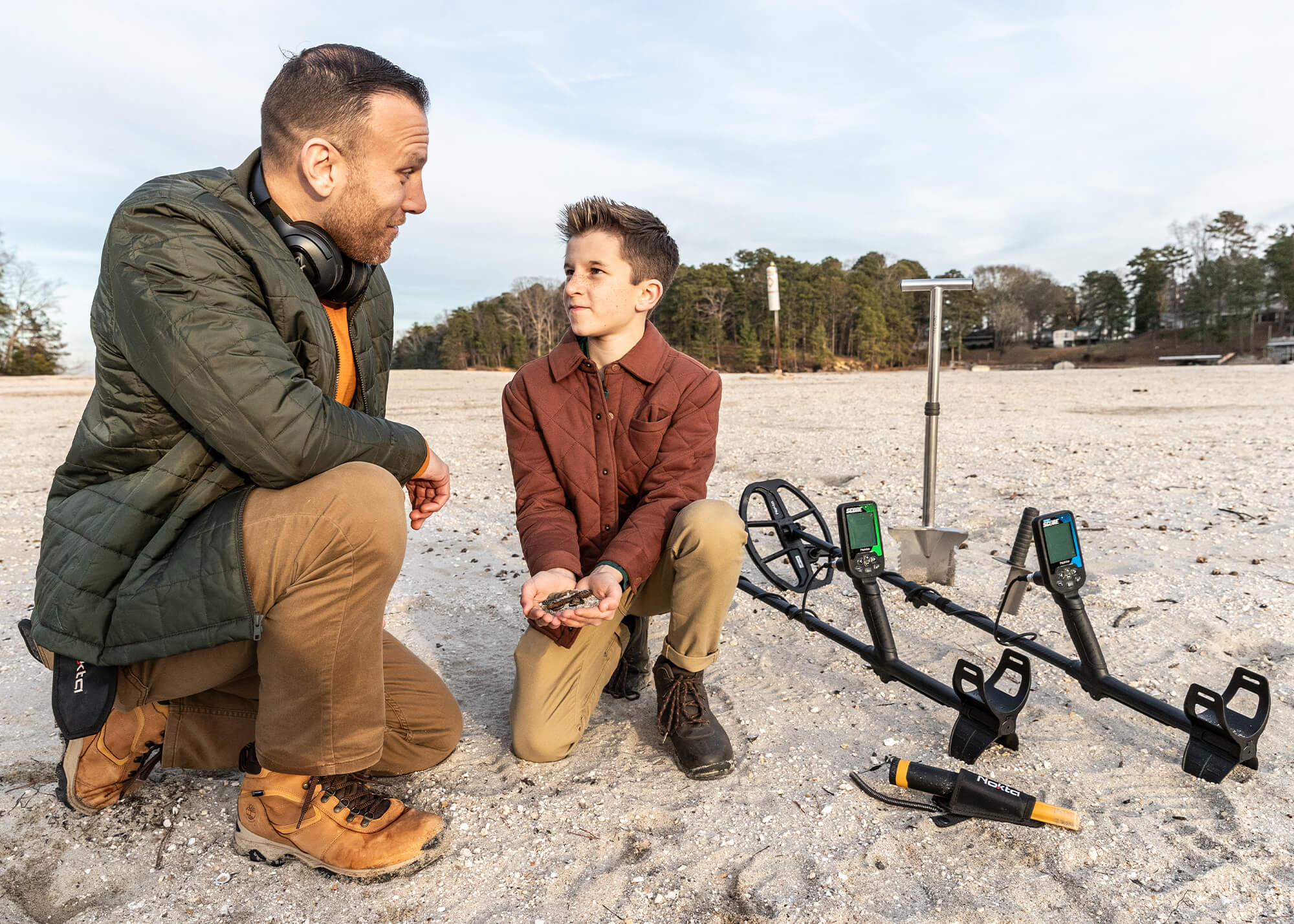
If you’ve ever used a low-cost metal detector and walked away frustrated, you’re not alone. Many beginners start with a budget machine thinking, “It’s just a hobby; I don’t need anything fancy.” But after a few hunts filled with junk signals, missed finds, and inconsistent performance, the reality becomes clear: Cheap detectors often miss targets, including valuable ones. At Aquaterra Elite Detectors, we’ve worked with many customers who upgraded their machines and immediately began finding more—sometimes in the exact same locations.
Cheap detectors struggle in areas with multiple buried objects such as parks, beaches, and older home sites. Instead of clearly identifying individual targets, they tend to blend signals together. This makes it difficult to distinguish valuable items from surrounding junk. In some cases, a good target like a coin sitting next to a nail can go completely undetected. Higher-quality detectors are designed with faster processing and better filtering, allowing them to separate targets more clearly even in cluttered ground.

Budget detectors often lack the sensitivity needed to reach deeper targets. While they may perform adequately for shallow objects, they struggle to detect items that have been buried for longer periods. Older coins and relics naturally sink deeper into the ground over time. A detector with limited depth capability will miss these entirely, leaving only the most obvious and recently lost items behind.
Another major limitation is unreliable target identification. Cheap detectors frequently produce inconsistent readings, where valuable metals may register as junk or where signals fluctuate unpredictably. This happens because lower-end machines do not have the advanced signal processing needed to accurately interpret conductivity differences between metals. As a result, users may ignore valuable targets or waste time digging unnecessary ones.
Lower-cost detectors are often unstable, especially in environments with interference or mineralized soil. This leads to frequent false signals, constant beeping, and difficulty determining what is actually worth digging. Over time, this creates frustration and reduces confidence in the machine, making it harder for users to trust what they are hearing.
Soil conditions play a significant role in metal detecting success. Mineralized ground, wet sand, and iron-rich environments can interfere with detection signals. Cheap detectors typically lack proper ground balancing capabilities, which means they cannot adjust to these conditions. As a result, they lose depth, stability, and accuracy in exactly the places where many valuable finds are located.
Budget machines are often designed with simplicity in mind, but this comes at the cost of performance. Without adjustable sensitivity, discrimination, and ground balance settings, users are unable to adapt to different environments or target types. This lack of control limits the detector’s effectiveness and prevents users from optimizing their searches.
Recovery speed refers to how quickly a detector can process one signal and move to the next. Cheap detectors often respond slowly, which causes them to miss nearby targets in areas with multiple objects. In busy environments such as parks or historical sites, this can mean missing valuable finds that are close to junk items.
Using a poor-quality detector can also affect how beginners develop their skills. Inconsistent signals and unreliable performance make it difficult to learn proper techniques or understand what different targets sound like. Many users assume they are doing something wrong, when in reality the limitation is the equipment itself.
While depth is important, the real issue with cheap detectors is overall performance. Accuracy, consistency, signal clarity, and target separation all work together. When any of these are lacking, the chances of missing valuable targets increase significantly.
At Aquaterra Elite Detectors, many customers report the same experience after upgrading. They return to locations they have already searched and begin finding coins, jewelry, and relics almost immediately. Better detectors provide clearer signals, more stable target identification, improved depth, and the ability to perform in a wider range of conditions. These improvements directly translate into better results.
Low-cost detectors can still have a place for very casual use, such as for children or for someone who simply wants to try the hobby without a large investment. However, for anyone serious about finding coins, jewelry, relics, or gold, a higher-quality detector becomes essential.
Instead of focusing only on price, it is more effective to choose a detector based on performance, reliability, and the type of detecting you plan to do. Factors such as ground conditions, target type, and long-term goals should all be considered.
Cheap metal detectors often miss targets not because the targets aren’t there, but because the machine cannot properly detect or interpret them. Success in metal detecting comes from a combination of technique, experience, and having the right equipment. When the equipment is lacking, even the best locations can seem unproductive.
If you are looking to move beyond the limitations of entry-level machines, Aquaterra Elite Detectors offers a range of high-performance detectors and expert guidance to help you get the most out of every search. Finding more starts with using the right tools.