Cart
0
You may also like


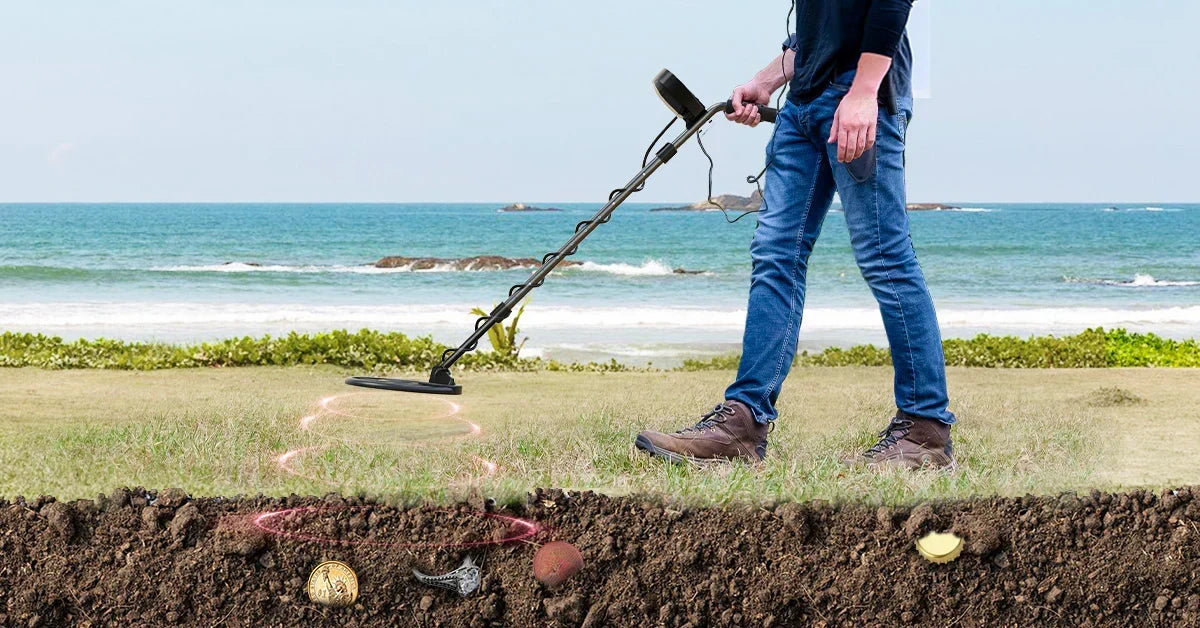
Good metal detecting begins with a controlled swing. Keeping the search coil low, level, and moving at a steady pace helps the detector read targets clearly and prevents gaps in your search pattern. The technique is easy to learn, but small mistakes can cost you depth and coverage.
Before you begin, shorten or lengthen the shaft so the coil rests just above the ground while you stand upright with your arm relaxed. The handgrip and arm cuff should support the detector without forcing you to lift your shoulder or bend at the waist. A comfortable setup improves coil control and reduces fatigue.
Secure the coil cable to the shaft and leave only enough slack for the coil to tilt. Select a suitable search mode, set the volume, and ground balance the detector if your model or site conditions require it. Start with stable sensitivity rather than the highest possible setting; an unstable detector can produce distracting false signals.

Hold the search coil close to the surface without dragging it. On smooth ground, about 1 to 2 inches is a useful starting point, although rocks, grass, roots, and the manufacturer’s instructions may require more clearance. Keep the coil parallel to the ground through the entire sweep.
Avoid a pendulum swing. When the coil rises at the left and right edges, detection depth decreases at both ends of the arc. Imagine sliding the coil across a flat tabletop instead.
Sweep the coil in a relaxed arc of roughly 3 to 4 feet. Do not reach so far that your torso twists or the coil tilts. Guide the detector with your forearm and shoulder rather than flicking it with your wrist.
A complete left-to-right-to-left cycle of about 2 to 3 seconds is a practical starting point for many detectors. However, the best speed depends on the model and search mode, so follow the manual and test your machine. Slow down in areas with heavy trash, mineralized soil, or several close signals.
Overlap each swing by about 30 to 50 percent. The detection field is not equally strong at every point around the coil, and non-overlapping sweeps can leave narrow strips of ground untouched. Take short steps so the coil moves over new ground without creating gaps.
Choose two landmarks and walk in straight, parallel lanes. When an area looks promising, search it again from a 90-degree angle. A second direction can reveal targets that were difficult to detect because of nearby trash, iron, or their position in the ground.
When you hear a signal, stop walking and shorten the sweep over the target. Pass the coil across the same spot several times, then turn 90 degrees and check it again. A repeatable signal from more than one direction is usually worth closer attention.
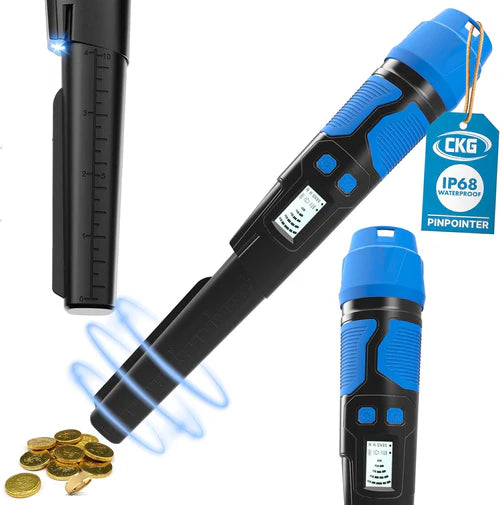
Use the detector’s pinpoint feature if available, or make increasingly short passes to center the response beneath the coil. Do not change several settings at once while checking a target. Consistent settings make it easier to learn what the detector is telling you.
· Lifting the coil at the end of each sweep
· Swinging so fast that signals become clipped or unclear
· Walking too quickly and leaving gaps between passes
· Dragging or striking the coil against the ground
· Using the wrist alone and tiring your arm
· Running sensitivity so high that the detector becomes unstable
Place a coin and a pull tab on clean ground where you can see them. Sweep over each target at different speeds while watching the coil height. Then practice moving forward with overlapping passes. Five minutes of visible-target practice makes it much easier to recognize a level swing and a repeatable signal in the field.
Check local laws and site rules, obtain permission before detecting on private property, and stay out of protected historic or archaeological areas. Fill every hole, replace the surface neatly, and remove the trash you find. Wear gloves, and do not handle suspected ammunition, explosives, utilities, or hazardous materials.
The proper metal detector swing is low, level, steady, and overlapping. Once that motion becomes automatic, you can focus on interpreting signals and enjoying the hunt. Careful coverage will usually find more than a fast walk across a larger area.
* Garrett Ace Apex featured in cover photo.